Hi Everyone,
Roger, I can rebuild your wheel if you like?
smiffy60 wrote:Interesting use and adaptation of the wheels most jennys had half a dozen different wheels that could be swapped over for different uses and you could get a set of wheels that was made to straighten or roll wire for edging sheet metal.
Ray, the wiring wheels (Usually a couple of sizes) are used to prepare the edge of the sheet as a safety edge and to stiffen the opening of a toolbox for example. The only time that wire actually goes through the Jenny is to set down or crimp the sheet onto the wire. A third roller is needed for straightening wire or spokes in this case. Here are a couple of examples, the big box belonged to my Great Grandfather and was used in his travels and the small one is a cheap knockoff that rides in my bike toolbox.
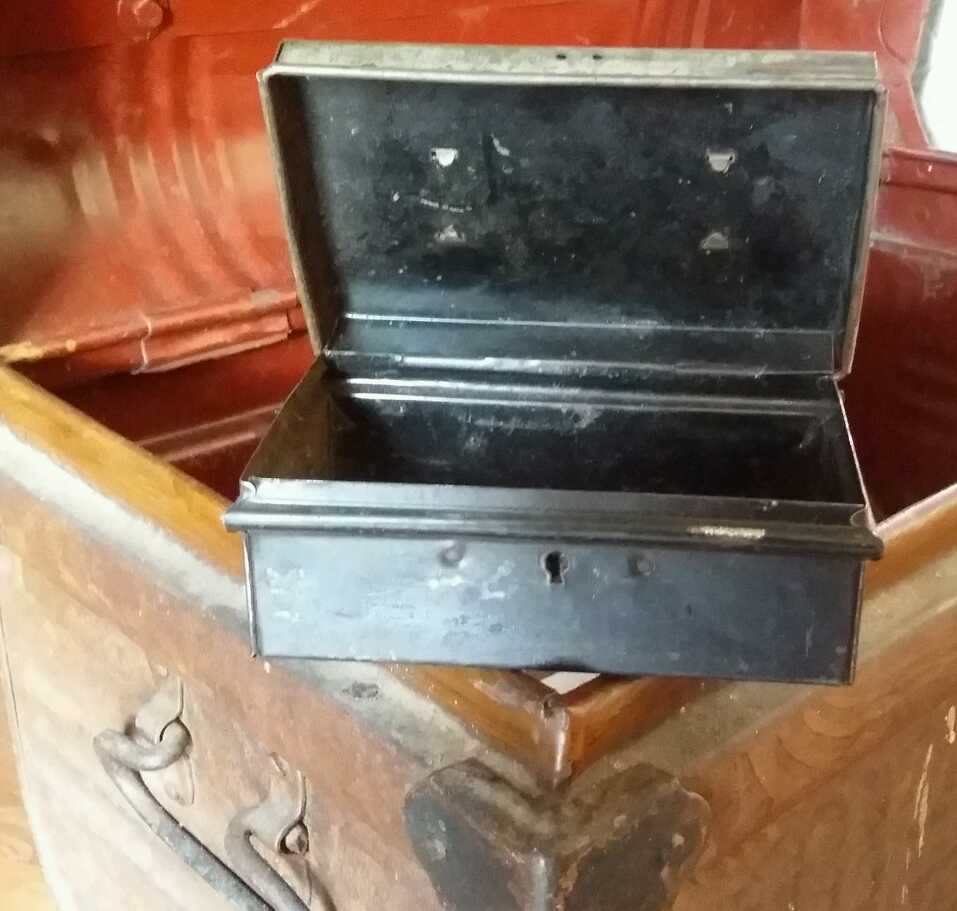
- 1507579958353.jpg (58.5 KiB) Viewed 7877 times
So now for an update: after a while of tinkering and thinking about the problem, I estimate about 9 meters of wire went into making the

front wheel. So with that in mind, at some stage the wire had to have been in a coil after going through reducing and straightening rollers. Then cut to length, mushroomed on one end and this is where I think the randomness starts as with short straight pieces there is no orientation to locate which way they get bent for the hub end.
With the straightening process, there has to be residual stress just to keep them straight. Stainless Steel work hardens but was not a problem for me to lengthen the amount that I did, maximum of 7 mm. Obviously it started out soft for them to roll the thread so I was not too bothered about hardness.
Now I am going to speculate that when I compressed the spokes in the rollers, I original curve from the coil revealed itself as the inside of the coil is a tighter radius than the outside and each spoke could come from anywhere in the coil? What do you Think?
My 3rd roller attachment worked and if I did it again, I would move it closer to the main rollers, but it was no magic fix. Just got me much closer to being straight. So I ended up going almost full circle back to the Hammer and Dolly. With the spokes being round, I decided a nylon hammer held in a vice with a hollow concave surface and another nylon hamer with a proud convex surface to hit them with. Using the vice allowed my left hand to position and twist the spokes. Having done this and getting all 36 to a standard that I was happy with makes you pretty good at using a Hammer!
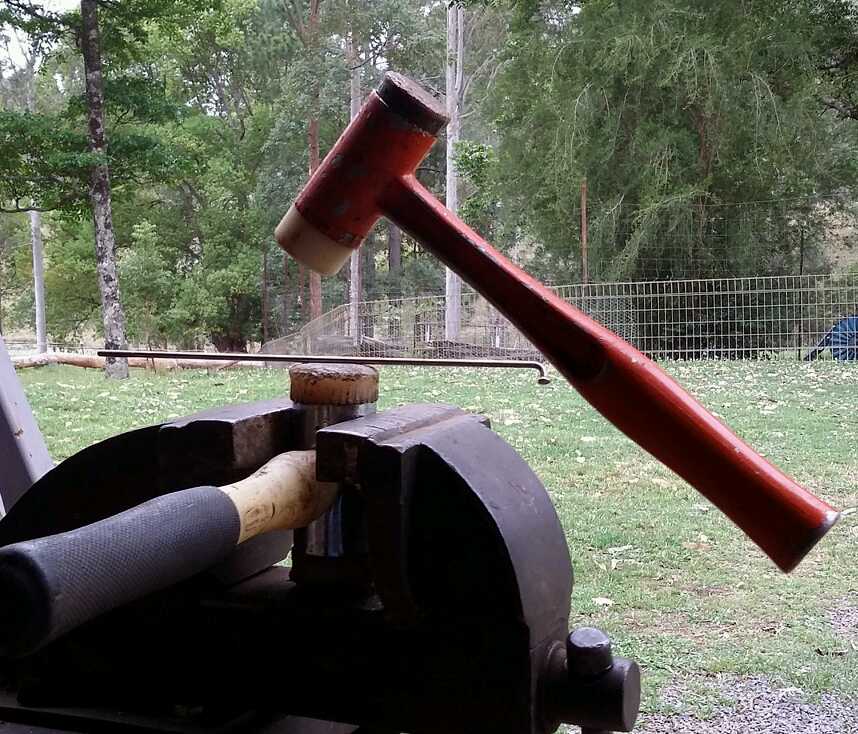
- 1507580935577.jpg (99.76 KiB) Viewed 7877 times
Here is the final result of my mission and yes I have learnt Something!
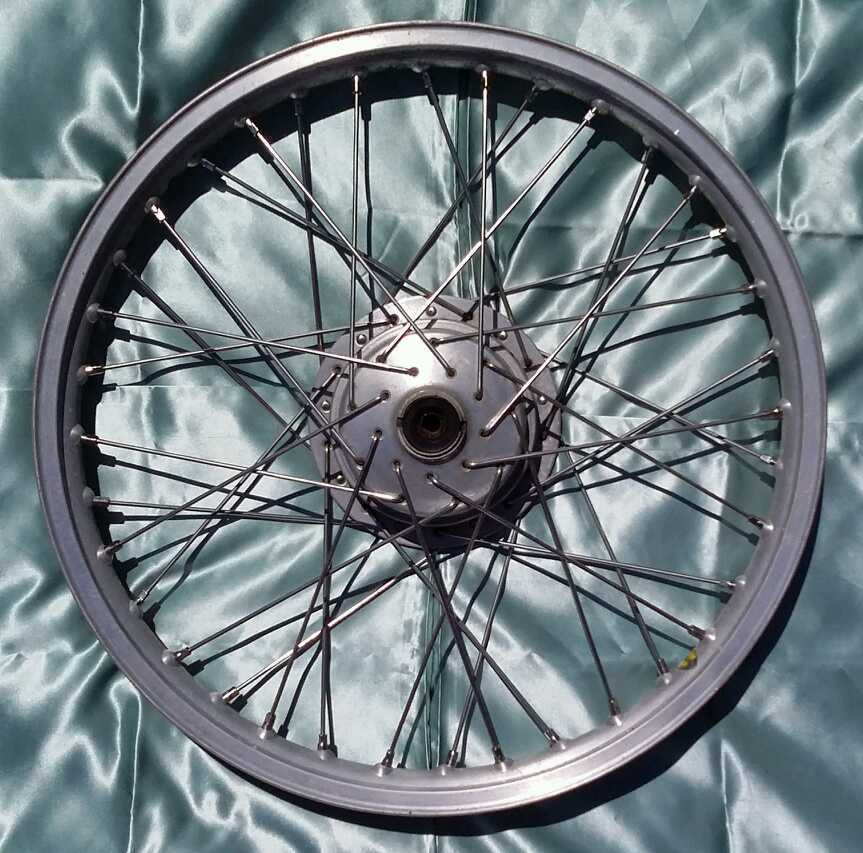
- 1507579466663.jpg (93.26 KiB) Viewed 7877 times